2. mach_eval Module Overview
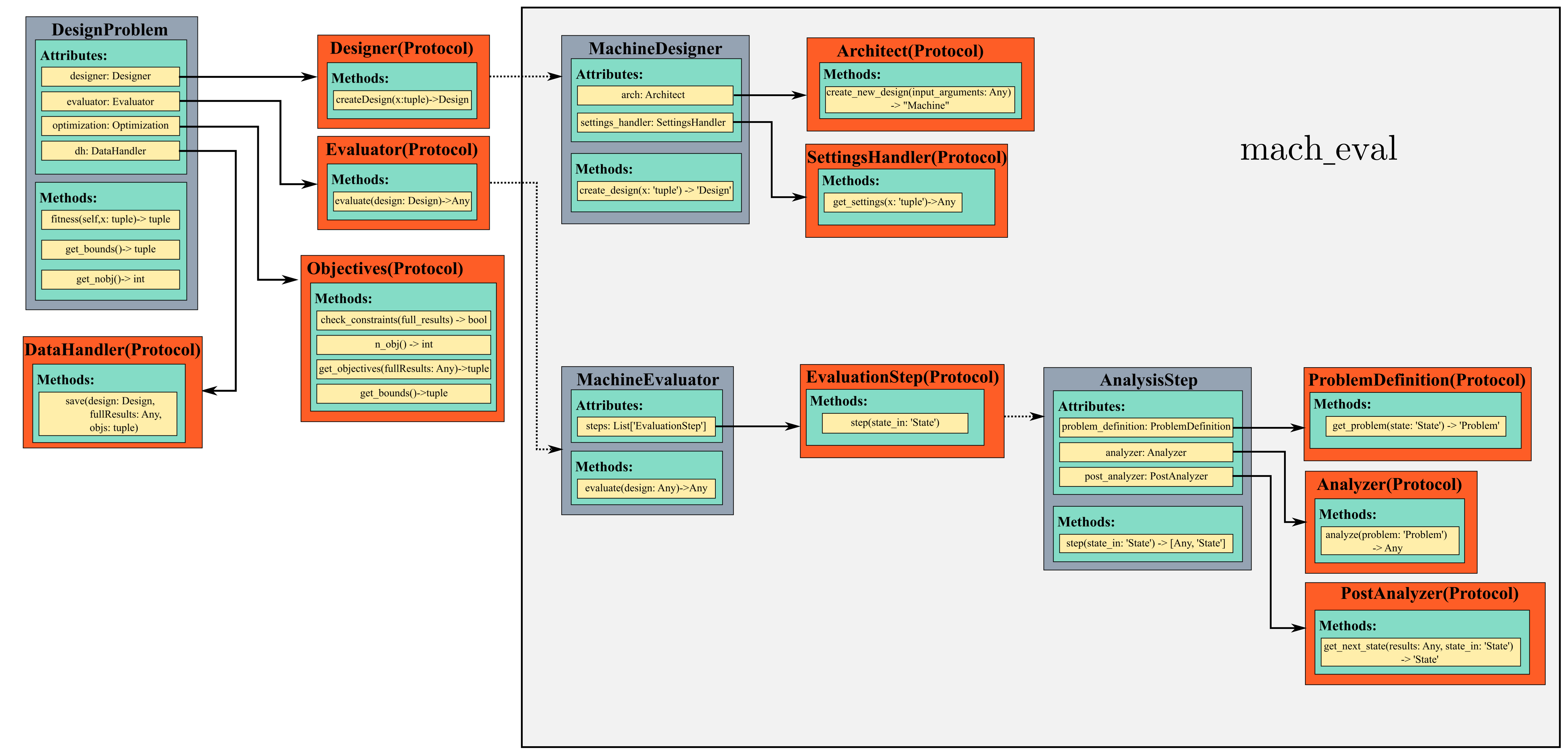
In this section, both the MachineDesigner and MachineEvaluator classes of the mach_eval module will be introduced and
explained. These classes act an extension of the mach_opt module’s Designer and Evaluator protocols respectively. The
purpose of this extension, is to provide a stronger framework for the flow of information between multiple evaluation steps (i.e.
an interdependent multiphysics machine design). These classes are constructed specifically for the design and evaluation of
electric machine, however they can be utilized in the optimization of any complex design problem. An example optimization
demonstrating the use of the mach_eval module is provided in this document.
2.1. MachineDesigner
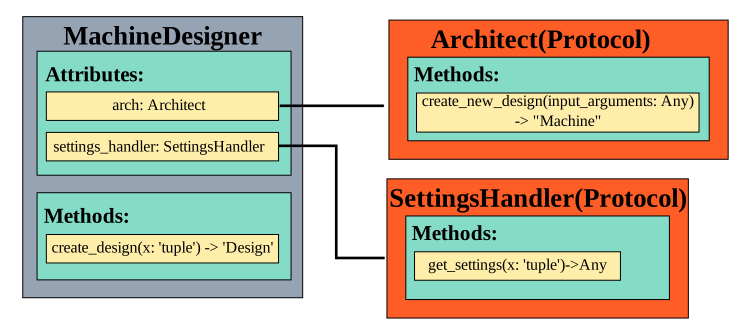
The MachineDesigner class is a concrete implementation of the Designer protocol from the mach_opt module. This class is responsible for converting free variables (likely from mach_opt) into a MachineDesign object. The MachineDesign object has two attributes:
a
machineobject that holds all the relevant information about the machine, including geometric dimensions, material properties, nameplate values, and winding specifications.a
settingsobject that describes the operating conditions (temperatures, currents/drive settings, operating speed/torques) as well as any other required information to evaluate the design.
class MachineDesigner(Designer):
        """Class representing a machine designer.

        Attributes:
                arch: Architect

                settings_handler: SettingsHandler
        """
        def __init__(self, arch: 'Architect', settings_handler: 'SettingsHandler'):
                self.arch = arch
                self.settings_handler = settings_handler

        def create_design(self, x: 'tuple') -> 'Design':
                """Creates a machine design from free variables.

                Args:
                        x: Tuple of design free variables.
                Returns:
                        A complete machine design including machine physical description and operating conditions.
                """
                machine = self.arch.create_new_design(x)
                settings = self.settings_handler.get_settings(x)
                design = MachineDesign(machine, settings)
                return design
The MachineDesigner requires two objects to be passed in on initialization: an Architect and a SettingsHandler. These inputs are defined as protocols and are responsible for the creation of the machine and settings objects respectively. These two objects are packaged together into a MachineDesign object which holds all the information about the design to be evaluated.

2.1.1. Architect
The Architect protocol defines a function call for the creation of a machine object. This object is designed to be a container for information regarding “what is on the bench” i.e. machine geometry, material properties, winding configuration, and nameplate values. The machine represents a physical machine which is built, but does not contain information about that conditions it is operated at.
class Architect(Protocol):
        """Base class for all machine design creating architect classes.

        Child classes of Architect establish the interface between a machine object and the design framework. All the math
        for calculating an initial machine design is done within child classes of this class, and a design dictionary is
        passed into the Machine object class on creation.
        """

        @abstractmethod
        def create_new_design(self, input_arguments: Any) -> "Machine":
                """Creates a new Machine object and returns it

                Args:
                        input_arguments: Any

                Returns:
                        machine: Machine
                """
                pass
2.1.2. SettingsHandler
Similar to the Architect, the SettingsHandler is responsible for creating a settings object which holds all other relevant information about the design and its operating point.
class SettingsHandler(Protocol):

        @abstractmethod
        def get_settings(self, x: 'tuple'):
                pass
2.2. MachineEvaluator
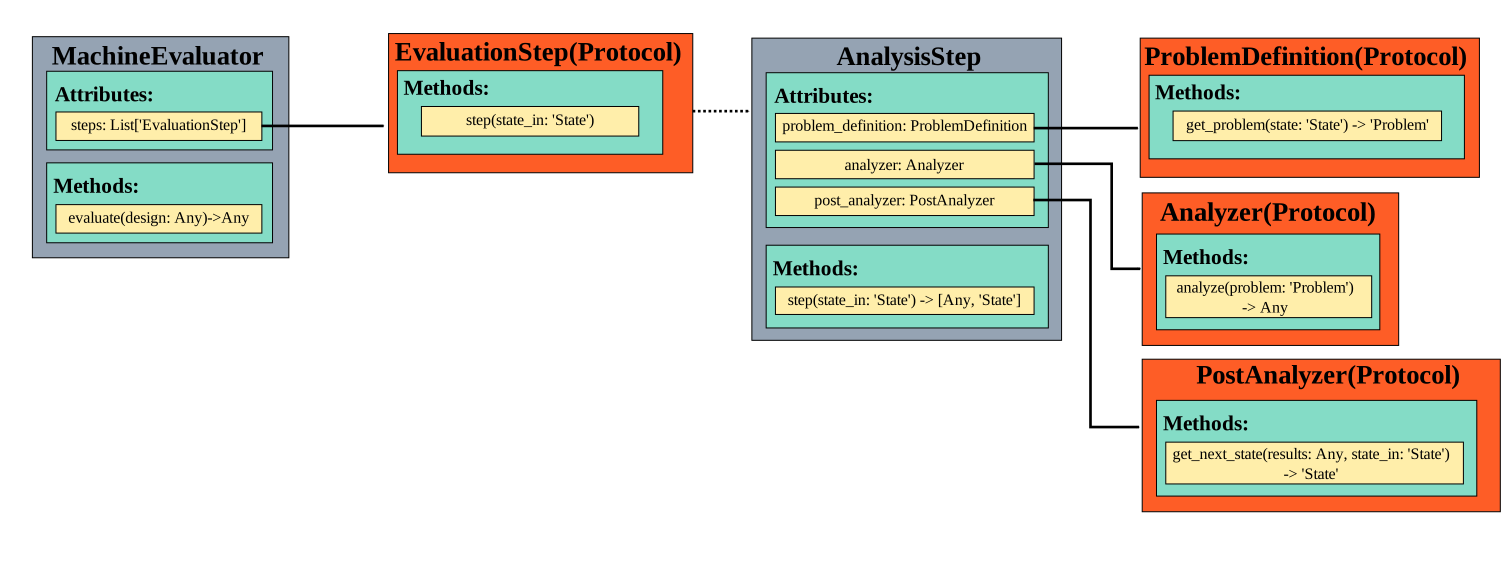
The MachineEvaluator class implements the Evaluator protocol from the mach_opt module. This class extracts evaluation results from the MachineDesign object created by the MachineDesigner. The evaluation process is split into distinct steps which are described by an EvaluationStep protocol. These step objects take in an input state, which holds the MachineDesign and any results from the previous evaluations, preform some evaluation on the design, and then package the results to a new state object.
class MachineEvaluator(Evaluator):
        """Wrapper class for all steps involved in analyzing a MachineDesign

        Attributes:
                steps: Sequential list of steps involved in evaluating a MachineDesign
        """
        def __init__(self, steps: List['EvaluationStep']):
                self.steps = steps

        def evaluate(self, design: Any):
                """Evaluates a MachineDesign

                Evaluates a MachineDesign with the list of evaluation steps that the class object was initialized with

                Args:
                        design: MachineDesign object to be evaluated
                Returns:
                        full_results: List of results obtained from each evaluation step
                """
                state_condition = Conditions()
                state_in = State(design, state_condition)
                full_results = []
                for evalStep in self.steps:
                        [results, state_out] = evalStep.step(state_in)
                        full_results.append(deepcopy([state_in, results, state_out]))
                        state_in = state_out
                return full_results
As seen in the code block above, during the evaluate method, a design object is passed into the method, and then packaged into a state object. The state object is a container for the design object, as well as any results and conditions for the current evaluation. When the MachineEvaluator is initialized, an ordered list of EvaluationStep is passed in. During the evaluate method, this list is stepped through by passing the current state object into the step method of the current step. The results of the evaluation step are saved to the full_results list as an entry of the following form [state_in, results, state_out]. By saving the results in this form before the state object is updated for the next step, a record of how the state changed as it is passed between steps is maintained.
2.2.1. EvaluationStep
The EvaluationStep protocol defines how state information should passed and returned with the step method. This method is where the machine evaluation takes place.
@runtime_checkable
class EvaluationStep(Protocol):
        """Protocol for an evaluation step"""
        @abstractmethod
        def step(self, state_in: 'State') -> [Any, 'State']:
                pass
2.2.2. AnalysisStep
mach_eval provides a recommended concrete implementation of the EvaluationStep protocol in the form of the AnalysisStep class. This class is designed to handle the conversion of a user defined input state to the form required for a specific Analyzer. The AnalysisStep class takes in three protocols on initialization:
- ProblemDefinition
Converts the input
stateinto aproblemclass which can be utilized by theAnalyzer- Analyzer
Performs an analysis on a problem. These are designed to handle specific analysis of complex machine design problems.
- PostAnalyzer
Packages the results of the analysis and the initial state back into the return state

The purpose of the AnalysisStep is to allow for generalized Analyzers to be utilized by multiple machine evaluations, where the end user only needs to specify the ProblemDefinition and PostAnalyzer classes. These later two classes serve as interfaces that convert a user-specific input state object into a general problem that the Analyzer can handle. The results from the analysis of the problem are then returned to the post analyzer where they are packaged back into the output state object for the next evaluation step.
class AnalysisStep(EvaluationStep):
        """Class representing a step which involves detailed analysis.

        Attributes:
                problem_definition: class or object defining the problem to be analyzed. This attribute acts as the interface between the machine design and the analyzer.

                analyzer: class or object which evaluates any aspect of a machine design.

                post_analyzer: class or object which processes the results obtained from the analyzer and packages in a form suitable for subsequent steps.
        """
        def __init__(self, problem_definition, analyzer, post_analyzer):
                self.problem_definition = problem_definition
                self.analyzer = analyzer
                self.post_analyzer = post_analyzer

        def step(self, state_in: 'State') -> [Any, 'State']:
                """Method to evaluate design using a analyzer

                Args:
                        state_in: input state which is to be evaluated.
                Returns:
                        results: Results obtained from the analyzer.

                        state_out: Output state to be used by the next step involved in the machine design evaluation.
                """
                problem = self.problem_definition.get_problem(state_in)
                results = self.analyzer.analyze(problem)
                state_out = self.post_analyzer.get_next_state(results, state_in)
                return results, state_out
2.2.2.1. ProblemDefinition
The ProblemDefinition converts an input state into a problem class which is specific to the Analyzer being used.
class ProblemDefinition(Protocol):
        """Protocol for a problem definition"""
        @abstractmethod
        def get_problem(self, state: 'State') -> 'Problem':
                pass
2.2.2.2. Analyzer
The Analyzer is responsible for performing some analysis on the input problem and then returning the results. Analyzers are designed to be generic so that they can be utilized by multiple design evaluations and machine topologies.
class Analyzer(Protocol):
        """Protocol for an analyzer"""
        @abstractmethod
        def analyze(self, problem: 'Problem') -> Any:
                pass
2.2.2.3. PostAnalyzer
The PostAnalyzer takes the results from the Analyzer and packages it back with the input state to create the new output state which will be utilized by the next EvaluationStep.
class PostAnalyzer(Protocol):
        """Protocol for a post analyzer """
        @abstractmethod
        def get_next_state(self, results: Any, state_in: 'State') -> 'State':
                pass